Ganap na gumaganang Radar at ARPA simulator. Tuklasin at subaybayan ang mga target nang may mataas na katumpakan, kalkulahin ang CPA/TCPA para sa bawat barko, at magsanay ng mga desisyon sa pag-iwas ng banggaan sa lahat ng kondisyon ng panahon at visibility.
Isang walkthrough ng target acquisition, pagsubaybay ng CPA/TCPA, lahat ng kondisyon ng panahon, at AI-driven na fault injection sa loob ng simulator.
Ang Radar/ARPA simulator ng NavXSim ay ginagaya ang radar ng barko na may kumpletong ARPA functionality. Nagsasanay ang mga trainee sa target acquisition, pagsubaybay, pagkalkula ng CPA at TCPA, at tamang pag-iwas sa banggaan ayon sa mga alituntunin ng COLREG โ sa hamog, ulan, sea clutter, at kondisyon sa gabi. Integrated sa Bridge Simulation para sa kumpletong multi-equipment na pagsasanay.
Tuklasin at subaybayan ang hanggang 40 sabay-sabay na ARPA target. Kinakalkula ang CPA at TCPA nang real time para sa bawat barko.
Magsanay sa rain clutter, sea clutter, hamog, at kondisyon sa gabi. Ganap na gumagana ang kontrol ng gain, sea clutter, at rain clutter.
Ang CPA na mas mababa sa 1.0 NM ay nagti-trigger ng babala ng banggaan. Magsanay ng tamang aksyon sa pag-iwas ayon sa COLREG Rules 8, 16, at 17.
Naitatala ang bawat desisyon sa radar. Nasusukat ang tama at maling aksyon sa pag-iwas. May AI debrief na nabubuo pagkatapos ng sesyon.
ARPA ON ยท Alerto sa CPA/TCPA ยท Radar simulation sa lahat ng panahon

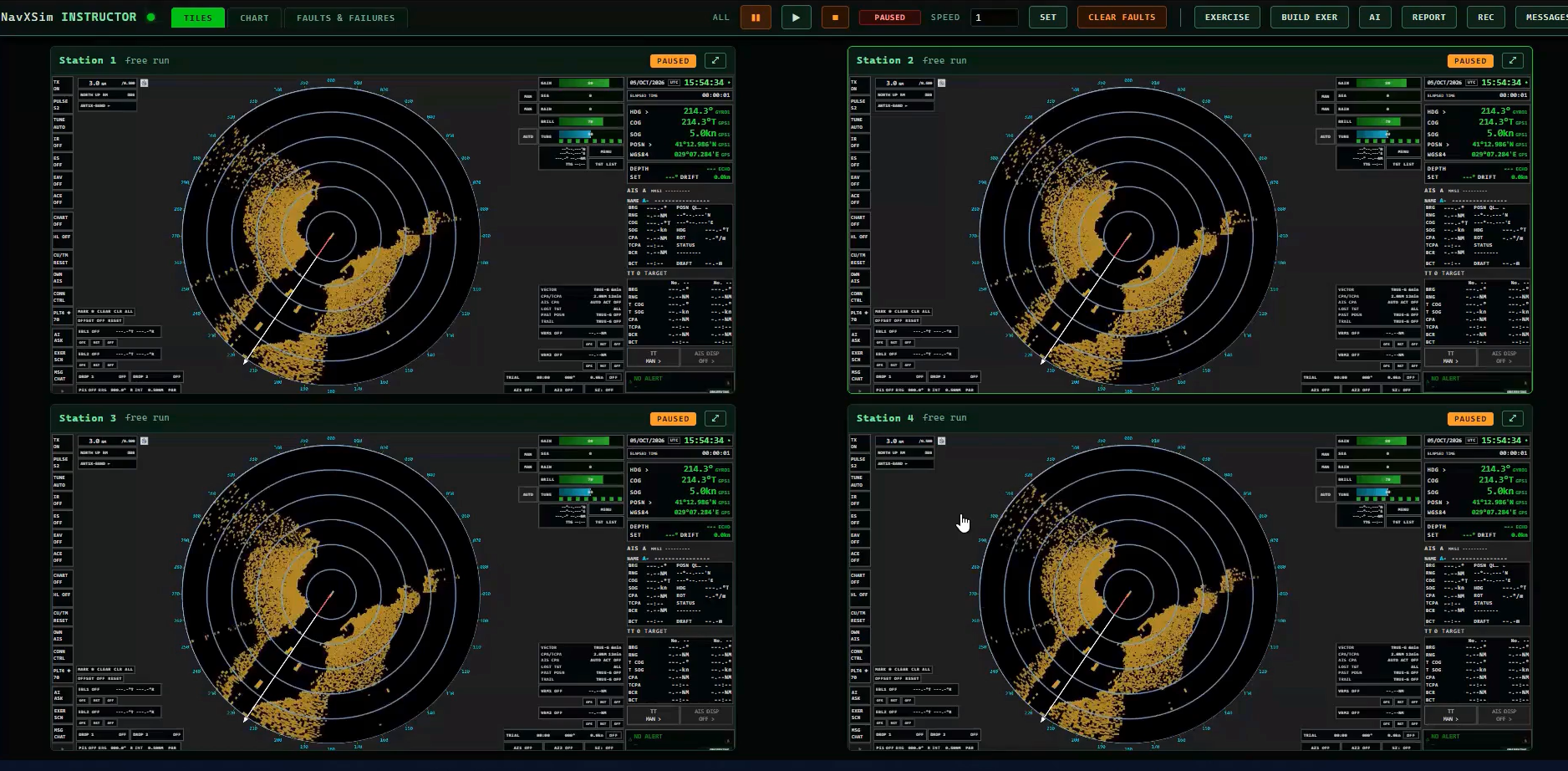
Ang sentralisadong instructor console ay nagbibigay ng real-time na pagmomonitor ng lahat ng radar station ng mga trainee mula sa iisang screen. Makikita ng mga instructor ang radar picture ng bawat trainee, status ng ehersisyo, mga target, alarm, at kondisyon ng kagamitan, na may isang-click na full-screen access sa kahit anong station.
Ang console ay nagpapahintulot sa mga instructor na i-pause/i-resume ang indibidwal na station o ang buong klase, i-configure ang mga kondisyon sa kapaligiran, at mag-inject ng makatotohanang mga pagkakamali sa radar, ARPA, navigation, at sensor sa panahon ng ehersisyo. Maaaring i-trigger ang mga pagkakamali nang mano-mano o i-schedule ayon sa timeline ng ehersisyo, na nagbibigay-daan sa magkakaibang senaryo para sa bawat trainee.
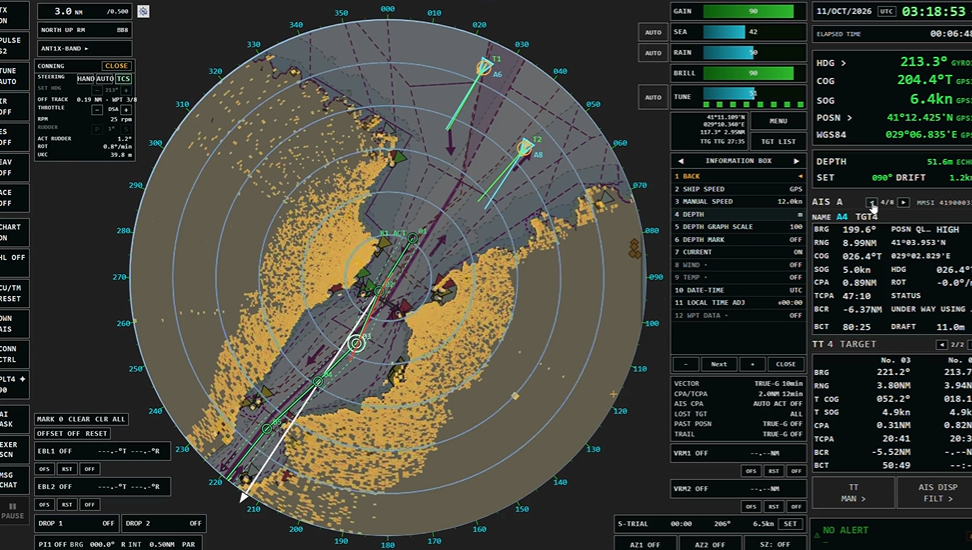
Ang makapangyarihang tactical chart ay nagbibigay sa mga instructor ng real-time na tanawin ng lugar ng ehersisyo, kasama ang sariling barko, target na barko, AIS contact, at planadong ruta ng trapiko. Maaaring gumawa, mag-edit, mag-assign, at kontrolin ng mga instructor ang ruta ng barko nang direkta sa chart, may suporta para sa single-run, shuttle, at reverse na paggalaw.
Maaaring i-position, palitan ng pangalan, at kontrolin nang dynamic ang mga barko para sa bilis, direksyon, at kurso, habang ang mga targeted na pagkakamali tulad ng kabiguan ng AIS, kaganapan ng SART, mga huwad na echo, at iba pang senaryo ay maaaring ilapat sa indibidwal na contact.
Maaaring i-save at i-deploy ang kapaligiran ng ehersisyo sa lahat ng station ng trainee nang sabay-sabay, kasama ang mga barko, ruta, kondisyon ng kapaligiran, naka-timing na pagkakamali, mga tagubilin sa briefing, at mga layunin sa pag-score.
The NavXSim Radar & ARPA Simulator is engineered against Section A-I/12 of the STCW Code — the standards governing the use of simulators — and covers the radar and ARPA competences of Tables A-II/1, A-II/2 and A-II/3. Its exercises, controls and assessment criteria are aligned to the syllabi of IMO Model Course 1.07 and 1.08, so a centre can run both courses on it as delivered.
Suitable for the selected objectives; realistic shipboard behaviour including the equipment’s limitations and errors; a controlled environment able to produce emergency and unusual situations; and full instructor control, monitoring and recording for effective debriefing.
The same realism applied to assessment: defined assessment objectives, a controlled environment, and an assessor able to control, monitor and record each candidate’s performance for objective evaluation.
Stabilised relative motion with sea- and ground-stabilised true motion; modelled weather, tidal streams, current, shadow sectors, spurious echoes and propagation effects; generated coastlines, buoyage and SART returns; a real-time environment with multiple own-ship stations and at least 20 target ships.
Manual and automatic target acquisition, past track information, exclusion areas, vector and graphic time-scale with full target data display, and trial manoeuvres.
Briefing and familiarisation, exercise monitoring with audio and visual observation, structured debriefing, and explicit, repeatable performance criteria that keep subjective judgement to a minimum.
Radar and ARPA competences for the Officer of the Watch, for Master and Chief Mate, and for vessels under 500 GT — mapped item by item to exercises, controls and assessment criteria in the simulator.
Aligned to Radar Navigation, Radar Plotting and Use of ARPA at operational level (1.07) and Radar, ARPA, Bridge Teamwork and Search and Rescue at management level (1.08) — from first set-up and plotting through target acquisition, trial manoeuvre and the limitations of the equipment.
| STCW reference | Category verified |
|---|---|
| A-I/12 §1 | General simulator performance standards — training |
| A-I/12 §2 | General simulator performance standards — assessment of competence |
| A-I/12 §4 | Radar simulation — mandatory facilities |
| A-I/12 §5 | ARPA simulation — mandatory facilities |
| A-I/12 §7 | Training procedures — briefing, familiarisation, monitoring, debriefing |
| A-I/12 §8 | Assessment procedures — explicit criteria, reliability and uniformity |
| Table A-II/1 | Officer of the Watch — use of radar and ARPA to maintain safety of navigation |
| Table A-II/2 | Master and Chief Mate — radar and ARPA competences |
| Table A-II/3 | Officers on vessels of less than 500 GT |
| Syllabus | Radar observation and plotting — setting up, measurement, plotting, misleading information |
| Syllabus | ARPA operational use — acquisition, vectors, trial manoeuvre, alarms, limitations |
| Model Course 1.07 | Radar Navigation, Radar Plotting and Use of ARPA — operational level |
| Model Course 1.08 | Radar, ARPA, Bridge Teamwork and Search and Rescue — management level |
| A-I/12 §1.2 | GPS spoofing and position-source error — EPFS failure, offset and false fixes, so a position is never trusted blindly |
| Table A-II/1 | AIS ghosting and misleading information — reported targets that are not there, and echoes with no AIS behind them |
| A-I/12 §1.4 | Ice navigation — bergs, bergy bits and growlers as radar contacts in a hazardous environment |
Piliin ang density ng trapiko, visibility, panahon, at kondisyon ng dagat. Itakda ang threshold ng CPA alarm ayon sa tunay na parameter ng barko.
Kinukuha ng trainee ang mga target, minomonitor ang CPA/TCPA, tinutukoy ang panganib ng banggaan, at gumagawa ng tamang aksyon sa pag-iwas ayon sa COLREGs.
Nire-review ang lahat ng desisyon batay sa mga kinakailangan ng COLREG. Ipinapaliwanag ang mga maling aksyon. May nabubuong sertipiko ng kompetensiya.
Mag-book ng demo at makita kung paano naghahatid ang NavXSim ng ARPA certification nang mas mabilis at mas mababa ang gastos.
info@navXSims.com | www.navXSims.com | www.nextdrona.com